

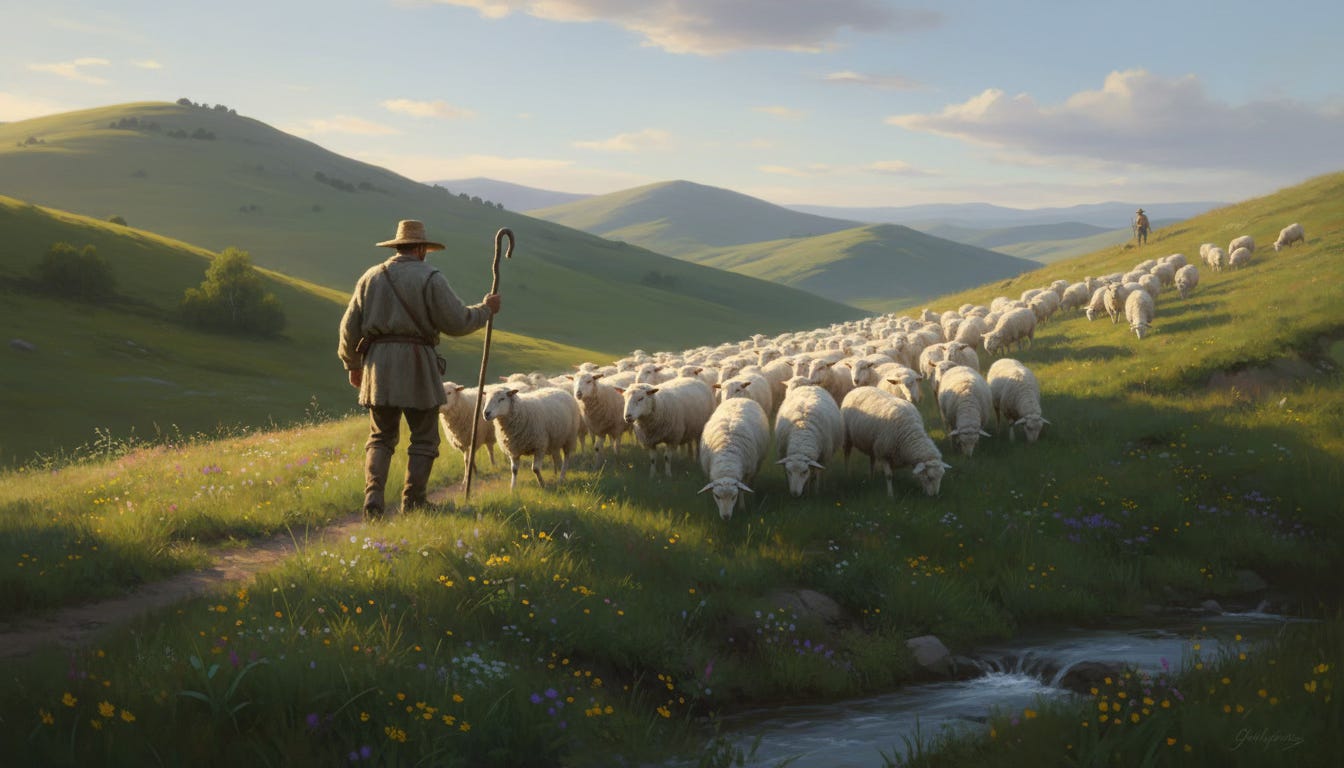
My three-year-old daughter has a habit of calling for either “Mummy” or “Daddy” as soon as she wakes up.
On this faithful day, she woke up and, as usual, she called out for Mummy. Without thinking too much, I replied, “Zoe, follow my voice and come to Mummy.” And she did exactly that. She followed the sound of my voice, traced her way to where I was, jumped into my arms, and gave me a big hug.
Immediately, I heard the Holy Spirit say, “My sheep know my voice.” This prompted me to do a study on John 10, and though this post might feel a little disjointed, please stay with me as we draw lessons from this chapter.
We Are His Sheep
John 10:3-5 “The person who watches the gate opens it for the shepherd. The sheep recognize the shepherd’s voice. He calls each of his own sheep by their name and he leads them out. When he has brought out all his own sheep, he goes in front of them. The sheep follow him because they know his voice. They will not follow a stranger. They will run away from a stranger because they do not recognize his voice.”
In this passage, Jesus compares us as believers to a sheep and calls Himself the Good Shepherd. As I studied the characteristics of sheep, a few things really stood out: they are generally gentle and calm, but they have a very limited sense of direction and easily get lost without their shepherd. They are also flock-oriented, meaning a sheep that strays from the flock becomes vulnerable and defenseless against predators like wolves. Most importantly, a sheep always recognizes the voice of its shepherd and responds to it.
Jesus was teaching that His sheep, recognize His voice and follow Him, and they do not follow the voice of a stranger. As believers, we are meant to grow so familiar with Jesus’ voice that when any contrary voice speaks, be it fear, lies, doubt, or worry, we know not to listen.
The Good Shepherd Who Leaves the Ninety-Nine for the One
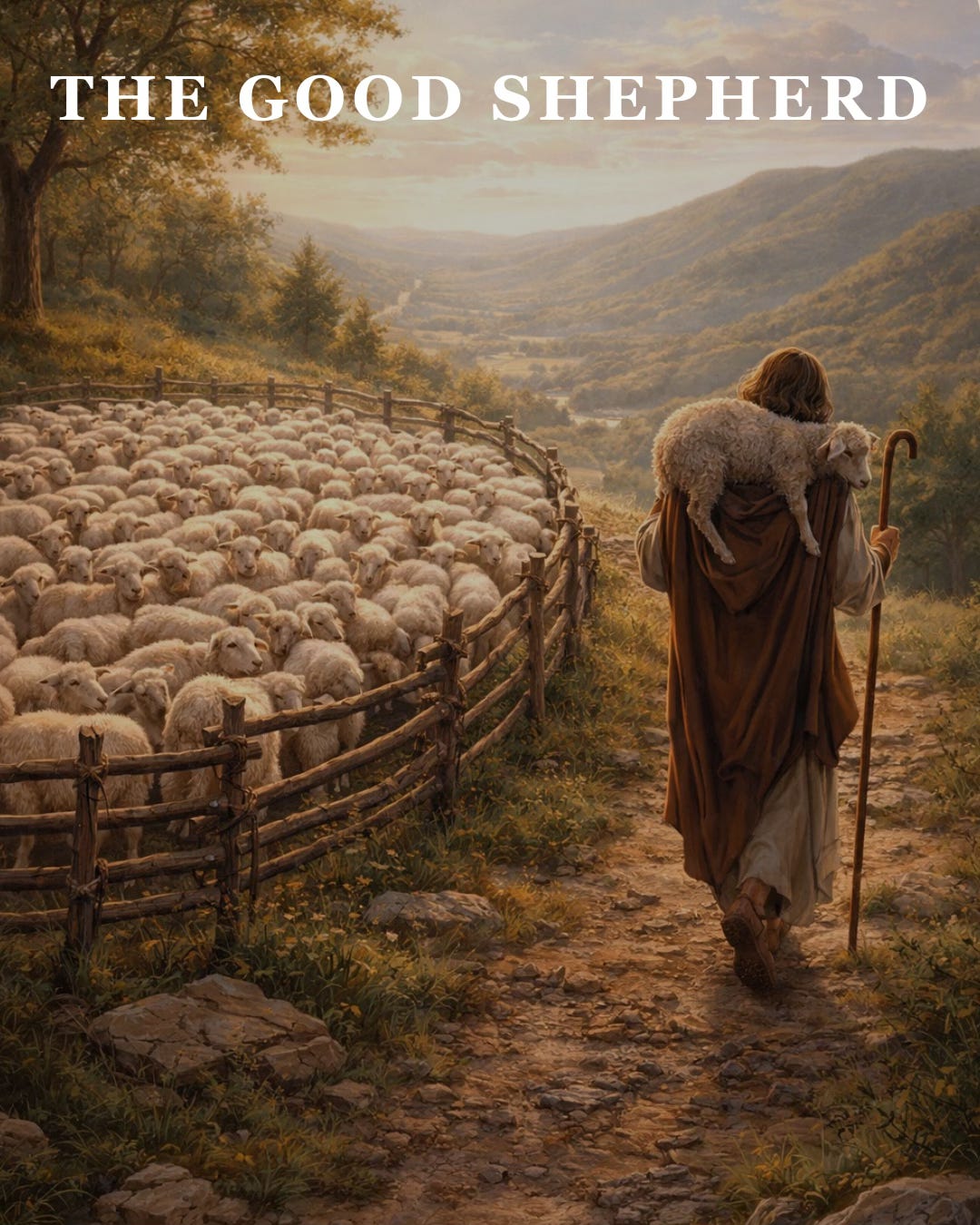
Every time I read Matthew 18:12, where Jesus talks about a man who has 100 sheep and discovers one is missing, I always wonder: “what type of Shephard leaves 99 to go look for the one lost sheep.” Is Jesus truly that ‘careless’ that He would leave the 99 randomly on the hills? What if wolves came to attack the remaining 99?
But as I studied John 10, it made so much more sense.
Verse 1 says, “Jesus then said, ‘I tell you this. A shepherd keeps his sheep in a safe place with a wall around it. There is a gate into that safe place. Anyone who gets into that place by another way, not through the gate, is not the shepherd. That person is a robber. He comes to take away the sheep for himself.’”
This “safe place” is what’s known as a sheep pen, an enclosed area, built from fencing, walls, or portable hurdles, used to contain sheep. It helps shepherds protect the flock from predators, manage tasks like counting, shearing, and lambing, and prevent the animals from wandering off. So, it makes perfect sense that the Shepherd would comfortably leave the remaining sheep securely in the sheep pen to go look for the one that strayed.
Jesus Will Always Go After the Sheep That Strays
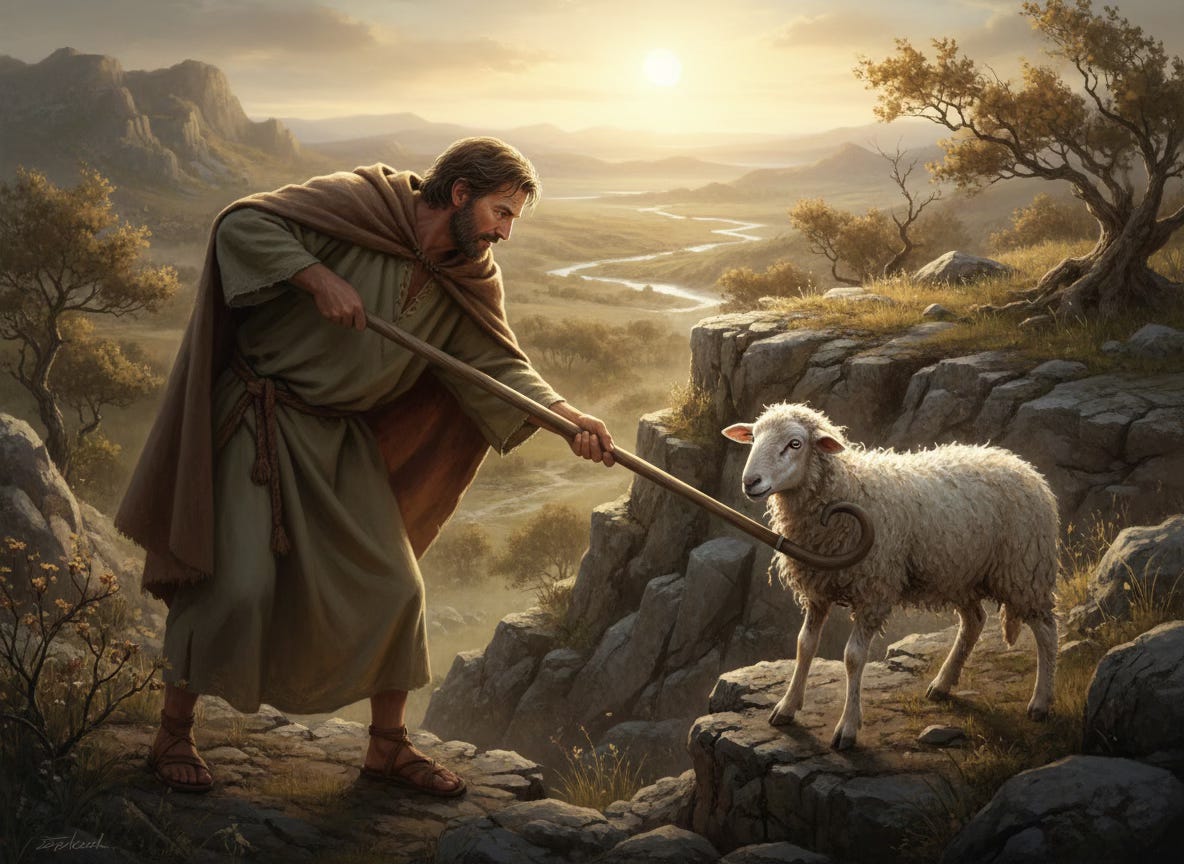
This illustration continues to blow my mind: Jesus will always go after every single sheep that strays, every lost soul. While I strayed, He was actively looking for me, even when I didn’t have to do anything to earn it.
David, a shepherd himself, drew on that experience to describe God’s protective love. A shepherd’s rod was a sturdy club used to fend off predators like wolves, while the staff, with its curved hook, guided and rescued wandering sheep.
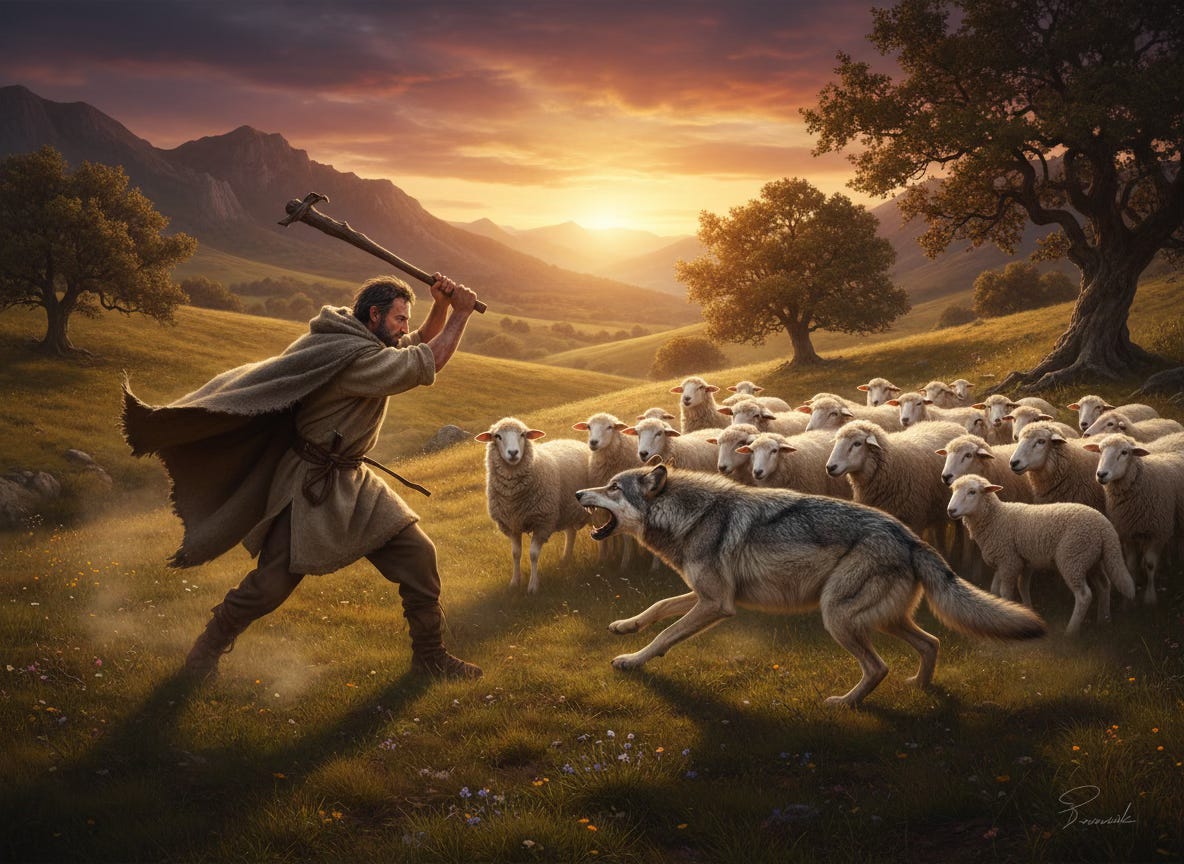
When David says, “Your rod and Your staff, they comfort me,” he’s expressing confidence that the Lord, both defends him from danger and gently directs his path. Jesus later echoed this imagery, calling Himself the Good Shepherd who lays down His life to protect His sheep from wolves. For believers, the rod and staff represent the assurance that God actively guards us against spiritual threats while lovingly guiding us through life.
Jesus: The Gate, The Shepherd, The Way
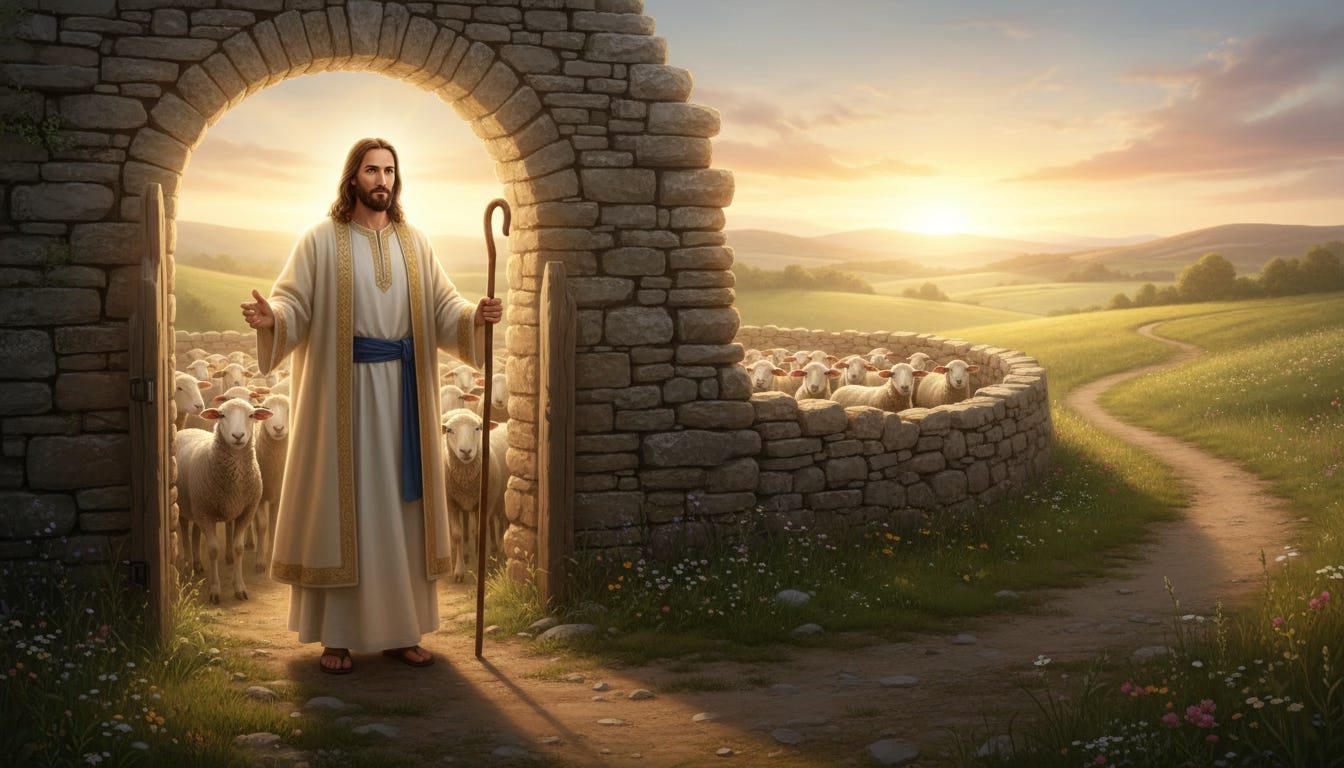
Jesus compares Himself to the gate in verse 7 “I am like the gate. Everyone who comes in through me will be safe. They will be free to come in and to go out. And they will find plenty of food. The robber only wants to take away my sheep. He wants to kill them. He comes only to destroy them. But I have come so that they can have true life. And so that they can have everything that they need. I am the good shepherd. The good shepherd would die so that he can save his sheep.”
Jesus uses this powerful imagery to describe His relationship with those who follow Him. Just as a shepherd in ancient times would sleep across the entrance of the sheep pen, literally becoming the gate to protect the flock, Jesus positions Himself as the only entrance to safety, freedom, and abundant life. Unlike the thief who comes to steal, kill, and destroy, Jesus came so that His sheep “can have everything they need.”
But Jesus didn’t stop at being the gate. He called Himself the Good Shepherd and then proved it. A hired hand might run when wolves approach, but the Good Shepherd lays down His life for the sheep. Jesus didn’t just say these words; He literarily died for every sheep in His flock, including the ones that strayed.
An Invitation This Easter
Jesus, the Good Shepherd, is still searching for lost sheep. He hasn’t given up on you. Even if you’ve strayed far from the fold or wandered into places you never thought you’d go, made choices you regret, or simply drifted away, He is coming for you.
Maybe you feel that tug in your heart right now. Maybe it’s this message, a conversation with a friend, or even stumbling across a Substack note, that’s the Shepherd calling your name, and reaching out with His staff to bring you home.
Easter isn’t just about bunnies and Easter eggs; it’s about a Shepherd who loved His sheep so much that He laid down His life.
You don’t need to have it all together.
Just come as you are, because he has already left the ninety-nine and is on His way to find you.
I love this! How many times I’ve read this passage and never really focused on what it actually means for Him to BE the gate in the way you laid it out! Beautiful!
Thank you ma for this